
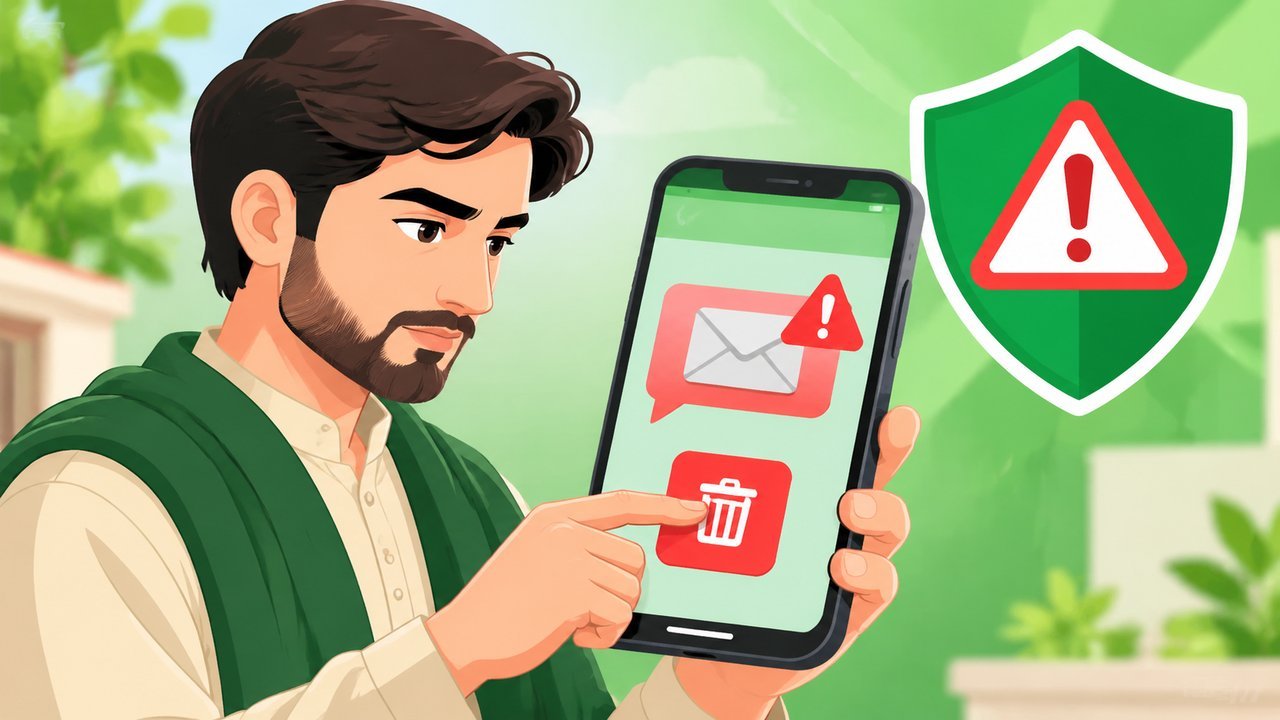
Every time BISP payments are discussed, fake messages follow. They arrive by SMS, WhatsApp, phone call and social media — and they all want the same thing: your money, your CNIC details, or your bank information. This guide shows you how to spot them, so you and your family do not lose anything to a scam.
Common 8171 scams to watch for
- “Pay a fee to release your payment”: a message or call says your qist is ready but you must pay a fee first. This is fraud. BISP payments are never released against a fee.
- Fake links: a message contains a link and asks you to enter your CNIC or bank details on a look-alike website. Only the official portal at https://8171.bisp.gov.pk/ is real.
- OTP and bank detail requests: someone calls or messages asking for your OTP, bank account number, or ATM PIN. BISP never asks for these — not by phone, SMS, or WhatsApp.
- “We will make you eligible”: an agent promises to add your name to the payment list or restore your eligibility for money. No one can do this. Eligibility is decided from your survey record only.
- Fake payment lists: screenshots and lists shared in groups claim to show who will be paid. Your own record is the only one that matters — check it yourself on the portal or by SMS to 8171.
How to spot a scam in seconds
Ask yourself three questions:

- Is it asking for money, an OTP, or a bank detail? If yes, it is a scam.
- Is it asking you to click a link or call a number from a random message? Do not trust it — check the portal yourself instead.
- Did it come from a stranger rather than the official 8171 service? Official replies come from the 8171 service, and the official portal is only https://8171.bisp.gov.pk/.
If any answer worries you, stop and do nothing. Do not reply, do not click, and do not pay.

What to do if you get a fake message
- Do not click any link in it and do not send money or any code.
- Do not share your CNIC number, bank details or OTP with the sender.
- Delete the message or block the number.
- Tell your family, especially older relatives, so they are not tricked either.
- If you already shared something or paid money, visit your nearest BISP office and tell them what happened, and contact your bank if bank details were involved.
Protect your CNIC
Your CNIC number is the key to your record. Never share it with strangers or agents, never leave your original CNIC with anyone, and never let someone else “check for you” in exchange for money. Checking is free and takes a minute — do it yourself on the portal or by SMS to 8171.

FAQ
Q: I got a message saying my payment is ready if I pay a small fee. Is it real? A: No. That is a scam. BISP never asks for a fee to release a payment.

Q: A caller asked for my OTP, saying they are from BISP. What should I do? A: Do not share it. BISP never asks for OTPs. End the call and do not call back numbers from random messages.
Q: How can I be sure about my own payment? A: Check it yourself: the official portal at https://8171.bisp.gov.pk/ with your CNIC, or an SMS to 8171. That is the only reliable answer.